
Smashy Road: Wanted 2
Bearbit Studios B.V.Action
4.04.15K Reviews
- Version
- 1.53
- Installs
- 10.00M
- Age Rating
- Everyone 10+
Screenshots
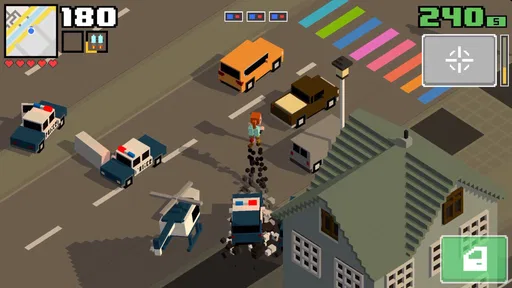
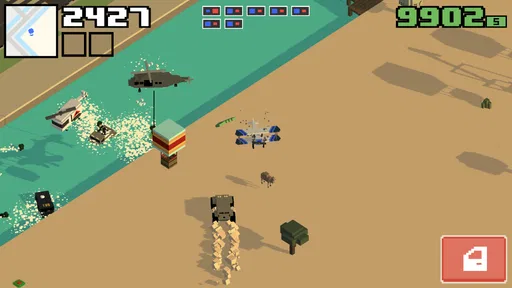
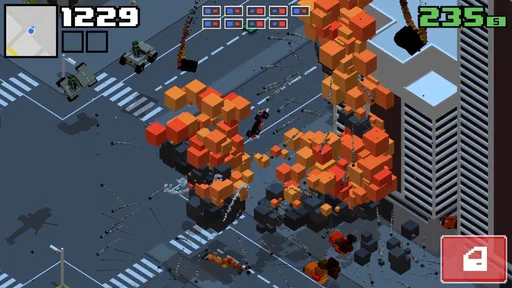
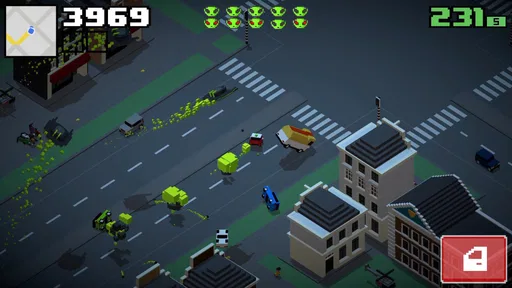
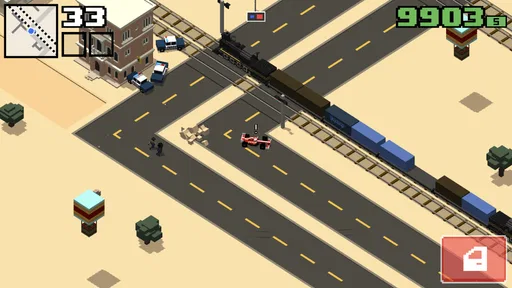
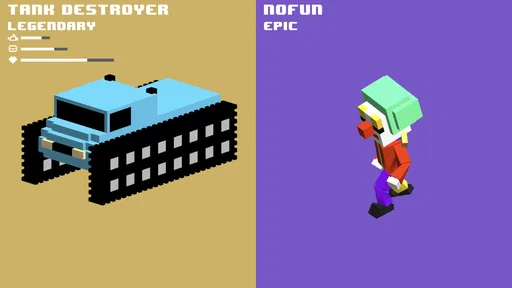
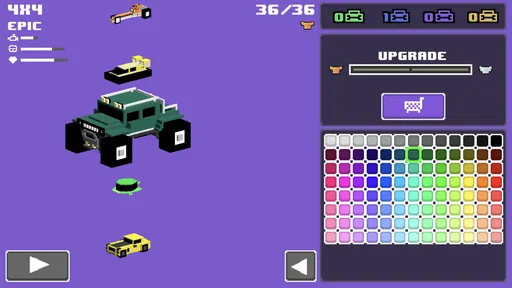
Our Review of Smashy Road: Wanted 2
 Analysis by Appyee
I spent time with Smashy Road: Wanted 2 as the kind of game I would open when I have a few minutes to spare but still want something active. It is a free action game from Bearbit Studios B.V. built around a simple question: how long can I keep moving while the police close in? That idea is easy to understand immediately, yet the actual appeal comes from learning how to turn messy escapes into controlled ones.
The first few runs are deliberately readable. I drive, avoid capture, use the surroundings to create distance, and try not to panic when the chase becomes crowded. There is no long explanation before the action begins, which suits the game well. I can start playing almost at once, and every failed attempt gives me a clear reason to try again: I turned too sharply, chose a poor route, or stayed exposed for too long.
That straightforward design makes it approachable, but it does not make every session equally satisfying. The game is strongest when I treat each run as a small experiment rather than expecting a carefully paced campaign. If you enjoy improving through repeated attempts, it has a good rhythm. If you want a story-led action game with a sequence of substantial missions, this is a much lighter experience.
How the chase creates goals from the first run
The early goals are mostly self-made, and that is important to understand before downloading it. I am not pushed through a large narrative structure with elaborate objectives. Instead, the immediate goal is survival: stay on the move, read the space around the vehicle, and avoid making the one mistake that ends the chase. Once I become comfortable with that, I naturally start setting better targets for myself.
My first useful target was not simply lasting longer. I wanted to survive long enough to feel that I had made deliberate decisions rather than just reacting. That changed the way I played. I began looking ahead for open routes instead of waiting until a police vehicle was already beside me. I also became more careful about entering tight areas when I did not have a clear way out.
This is where the game’s compact format works in its favor. A failed attempt does not feel like losing a large investment of time. I can restart, adjust one habit, and immediately see whether the change helps. That makes it suitable for a short break, a commute, or a quick session while waiting for something. The trade-off is that players who need a strong external objective may find the early phase thin.
The action also creates small decisions that are easy to overlook. A route that looks open may leave me with no escape once the chase catches up. A risky shortcut may be worthwhile when pressure is high, but it can also turn a manageable run into a sudden crash. I found that the best early progress came from resisting the urge to drive as aggressively as possible. Staying flexible was usually more valuable than taking every opportunity to move quickly.
The most useful beginner habit is to plan the next turn before the current danger arrives. That sounds obvious, but the camera, traffic, and pursuit pressure can make me focus only on what is directly in front of the vehicle. When I deliberately scan for two possible exits, I make fewer desperate movements. This is a practical difference between surviving by luck and surviving because I understand the space.
Why the first unlocks matter more than they seem
Progress becomes more motivating when the game gives me reasons to keep returning beyond a single high score. Unlocks provide a visible sense that repeated play is leading somewhere. I like that they give the chase a longer-term purpose, even when an individual run ends quickly. The important point is that unlocks do not replace skill. They make me curious, but I still have to drive well enough to benefit from another attempt.
I recommend treating early unlock progress as a side effect of learning rather than as a checklist to rush through. When I focused too heavily on obtaining the next reward, I took more reckless routes and ended runs sooner. When I concentrated on staying calm and improving my escape choices, progress felt more consistent. This is one of the better design choices in the game: the pursuit remains the central activity instead of becoming background noise for a collection system.
There is also a useful psychological split between short-term and long-term goals. In the short term, I want to escape the immediate group of pursuers. In the longer term, I want to unlock more of what the game offers and build a better personal record. Those goals support each other without requiring a complicated interface. I always know what I am trying to do in the moment, while the broader progression gives me a reason to start another run.
Still, the unlock structure will not satisfy everyone equally. Players who enjoy deep character builds, detailed equipment choices, or a campaign with carefully authored stages may find it limited compared with larger action games. Here, the pleasure comes from repetition, reaction, and gradual familiarity. It is closer to refining a favorite arcade challenge than completing a traditional adventure.
What progress feels like during longer play
The clearest progress signal is my own improved judgment. At first, I often treated every open stretch as an invitation to push forward. Later, I started noticing how much safer it was to preserve options. I learned to value a route that kept several directions available, even if it looked less exciting. That kind of progress is not always displayed as a dramatic reward, but I could feel it in the length and consistency of my runs.
The game also benefits from recognizable feedback. A run that ends because I made a bad turn teaches me something different from one that collapses after prolonged pressure. I can usually identify the mistake without needing a replay system or a detailed explanation. For an arcade-style chase, that clarity matters. It keeps failure from feeling random, even when the situation becomes chaotic.
My advice is to change only one decision pattern at a time. For example, I might spend several attempts avoiding narrow routes, then focus on keeping more distance from pursuers, rather than changing everything at once. This makes the improvement easier to notice. It also prevents the common frustration of playing repeatedly without knowing whether I am actually getting better.
The progression is at its best when I allow the game to remain a game rather than turning it into a task. I do not need to maximize every opportunity in each run. Sometimes the smarter choice is to accept a modest result and restart with a clearer plan. Because the sessions are compact, this approach does not feel punishing. I can test an idea, learn from it, and move on without a long recovery period.
There is a practical question many players will have: can someone enjoy it without spending money? The game is free to play, and I could experience the central chase without paying. Optional in-app purchases range from $0.99 to $18.99 per item, so anyone sensitive to extra spending should check purchase settings before handing the device to a child. I did not need to buy anything to understand the core appeal, but players who dislike any form of optional monetization may still prefer a paid alternative with a fixed price.
Another likely question is whether it suits younger players. Its content rating is Everyone 10+, which places it in a broadly accessible range while still signaling that parents should consider the child’s age and the nature of the action. The controls and premise are easy to grasp, but the repeated chase-and-fail loop can encourage “one more try” behavior. I would be comfortable recommending it to an older child with sensible limits, rather than treating it as an automatic choice for every age.
The difficulty curve rewards composure, not just speed
The difficulty curve feels most noticeable when the chase stops being a simple escape and starts demanding route management. Surviving is not only about moving quickly. It is about preserving enough control to respond when the situation changes. I found that panic was often more dangerous than the pursuers themselves. A rushed turn could remove several future options at once.
This creates a useful contrast with many conventional action games. In a mission-based shooter, I may rely on equipment, checkpoints, or a clearly marked objective. Here, the pressure is more immediate and less forgiving. In a racing game, I might focus on clean lines and lap times. In this game, a clean line is not always the best line because escape depends on what might happen a moment later. The challenge is closer to improvisation under pressure.
That design can feel unfair when several hazards converge and I have little room to recover. The game’s appeal depends partly on accepting that some runs will end abruptly. I would not recommend it to someone who wants every failure to feel fully preventable. I would recommend it to someone who enjoys reading chaotic situations and gradually recognizing patterns in their own mistakes.
One advanced tactic that helped me was separating movement from escape. I stopped assuming that traveling farther always meant becoming safer. Sometimes a shorter maneuver that changed the angle of pursuit was more useful than continuing straight into a crowded area. This is not a flashy strategy, but it made my play more deliberate. I began asking, “What position will give me choices next?” instead of only asking, “How do I get away right now?”
I also learned not to restart too quickly after a poor opening. Some runs that began badly became useful practice because I had to recover from a compromised position. That taught me more about controlling pressure than immediately starting over after every small mistake. On the other hand, if I had already lost all meaningful options, continuing was rarely productive. Knowing when to salvage a run and when to reset became part of the challenge.
Pacing, repetition, and the pressure to keep playing
The pacing is built around short bursts rather than a slow, cinematic build. The game gets to the point quickly, and that makes it easy to fit into everyday life. I could play a few attempts while waiting for a friend, then stop without feeling that I had abandoned a complicated mission. When I had more time, the same structure encouraged a longer session because each failed run created an immediate reason to try again.
A realistic example is a ten-minute break during a busy day. I can open the game, complete several attempts, and focus on one goal such as choosing safer exits. There is no need to remember a large plot or reconstruct a complex loadout. That convenience is a genuine strength. It also explains why the game has attracted a substantial audience, with over ten million installs and an average rating of 4.0 from around 105 thousand ratings.
Those figures suggest broad appeal, but they should not be mistaken for proof that the game fits every player. The repeated structure is the main attraction and the main limitation. If I enjoy arcade loops, the repetition feels like practice. If I need frequent changes in scenery, mission design, or mechanics, the same loop may become familiar too quickly.
Retention comes from several pressures working together. I want to beat my previous performance, see what progression brings next, and prove that a mistake from the last attempt was avoidable. That combination is effective because each run is brief enough to restart but meaningful enough to remember. The danger is that the game can encourage unplanned extended sessions. I often intended to play briefly and continued because the next attempt felt close to success.
For that reason, I would set a simple stopping rule: stop after a clear improvement, or stop after several unfocused failures. Continuing while frustrated rarely helped me. The game rewards attention, and tired reactions made the chase feel more random than it really was. This is a small but useful way to keep the loop enjoyable rather than letting it turn into a repetitive grind.
The title runs on Android devices using Android 7.0 or later, and the current version is 1.53. That makes it accessible to people using older compatible phones rather than requiring the newest hardware. I would still judge the experience on the specific device, especially if smooth control matters to you, but the stated minimum makes the audience fairly broad. On iOS, I would likewise treat it as a casual action download rather than expecting the depth or presentation of a console-scale release.
Who should choose it, and who should look elsewhere
I think it is a good match for players who enjoy quick arcade sessions, driving under pressure, and learning through repetition. It is especially appealing if you like games where a small improvement in decision-making can noticeably extend a run. People who want something they can understand within minutes but continue practicing for much longer will probably get the most from it.
It is less suitable for someone looking for a structured story, carefully paced levels, or a calm driving experience. It is also not my first recommendation for players who dislike repeated failure or who want a fixed, interruption-free purchase with no optional spending. A traditional racing game would be better for clean competition and predictable tracks. A larger open-world action game would be better for exploration, narrative, and a broader range of activities.
Compared with endless-runner games, this one feels more dependent on steering judgment than on memorizing a simple sequence of obstacles. Compared with full racing games, it is less about perfect laps and more about escaping a changing threat. That middle ground is its identity. It gives me enough control to feel responsible for success, but enough unpredictability to keep each attempt tense.
One trade-off is that the game’s simplicity leaves less room for players who want to express a personal play style through detailed customization or strategic planning. The satisfaction comes from execution. I can improve my choices, but I am not building a complicated long-term strategy in the way I might in a deeper action role-playing game. Knowing that difference before installing it will prevent disappointment.
My verdict on the progression and staying power
After playing it with attention to its goals, unlocks, challenge, and pacing, I see Smashy Road: Wanted 2 as a focused arcade chase rather than a complete action campaign. Its progression works because it gives repeated attempts a purpose without burying the immediate driving challenge under menus or lengthy explanations. I always have a reason to try again, but the game still expects me to create some of my own goals.
The strongest part is the relationship between failure and learning. A run can end quickly, yet it rarely feels meaningless when I know which decision caused the collapse. The best sessions are the ones in which I move from frantic reactions to deliberate route choices. That change gives the game more depth than its simple premise initially suggests.
The weakest part is also clear: repetition can become the entire experience. Unlocks and personal improvement may sustain me for a long time, but they will not compensate for a dislike of arcade loops. The optional purchase range is another consideration for families and for players who prefer completely fixed pricing. Neither issue ruins the game, but both should be part of the decision.
Bearbit Studios B.V. has made something easy to start and surprisingly difficult to master. With a free price, an Everyone 10+ rating, and a compact structure, it is convenient to try. I would recommend it to a friend who wants a tense mobile escape game for short sessions and enjoys turning mistakes into better runs. I would skip it for a friend asking for a story-heavy adventure or a polished racing simulator.
My final advice is to approach it with a small plan: play the first attempts to learn the environment, choose one driving habit to improve, and treat unlocks as motivation rather than the sole objective. That way, the progression feels earned instead of mechanical. If the idea of surviving one more chase sounds appealing, this is a strong free option; if the chase itself sounds repetitive, no amount of extra progression will change its basic character.
Verdict
Strengths of Smashy Road: Wanted 2
- Fast-paced driving feels exciting from the first session.
- Many vehicles offer noticeably different handling and abilities.
- Open environments provide plenty of room for creative escapes.
- Short runs make it easy to enjoy during quick breaks.
- Unlockable characters add variety beyond simply collecting cars.
Limitations of Smashy Road: Wanted 2
- Controls can feel imprecise when traffic becomes especially crowded.
- Progress may become repetitive after mastering the main escape loop.
- Some unlocks rely heavily on random rewards and persistence.
- Visual effects and traffic can occasionally make hazards hard to read.
- Ads and optional purchases may interrupt the otherwise quick gameplay.
Similar Picks in This Category
View All
Temple Run 2: Endless Escape
Imangi Studios4.1

PUBG MOBILE
Level Infinite4.3

Free Fire: 9th Anniversary
GARENA INTERNATIONAL I4.4

Talking Tom: Hero Dash Run
Outfit7 Limited4.3

slither.io
Lowtech Studios3.9

Sniper 3D:Gun Shooting Games
Wildlife Studios4.6
Frequently Asked Questions
What is Smashy Road: Wanted 2?
Smashy Road: Wanted 2 is an arcade driving and police-escape game for Android and iOS. You drive through an open, blocky world while trying to survive increasingly aggressive police pursuits. The game combines simple controls, vehicle collection, short action-packed sessions, and randomly generated situations, making it easy to start but progressively more challenging as you unlock better cars, characters, and upgrades.
Is Smashy Road: Wanted 2 free to download and play?
Yes, Smashy Road: Wanted 2 can generally be downloaded for free, but the game may include optional in-app purchases and advertising. You can play without spending money, although progress, rewards, or certain convenience features may be connected to ads or purchases. Before downloading, check the current store listing for the latest information about supported devices, pricing, advertisements, and available transactions.
Does Smashy Road: Wanted 2 require an internet connection?
The core driving and police-chase gameplay can usually be enjoyed offline, which makes Smashy Road: Wanted 2 suitable for short sessions while traveling or when mobile data is unavailable. However, some features may depend on an internet connection, including advertisements, online services, store content, or reward systems. Availability can vary by device version and future updates.
How does the gameplay and progression work?
You control a vehicle from a top-down perspective and attempt to escape police vehicles while navigating roads, obstacles, buildings, water, and other hazards. The longer you survive, the more intense the pursuit becomes. During play, you can discover money and rewards, complete objectives, unlock different vehicles and characters, and experiment with unique abilities that change how each chase feels.
Is Smashy Road: Wanted 2 suitable for children?
Smashy Road: Wanted 2 uses colorful, cartoon-style graphics and does not focus on realistic violence, but it still contains car crashes, police chases, explosions, and arcade-style destruction. Parents should also review the game’s advertising and in-app purchase options, as these may vary by platform and region. Checking the official age rating and enabling purchase restrictions is recommended for younger players.
Play our best games!


